Skip to content

The House of the Inquisition

"Interpretive center in Monsaraz focused on Jewish history, New Christians, and inquisitorial memory under Évora’s jurisdiction."

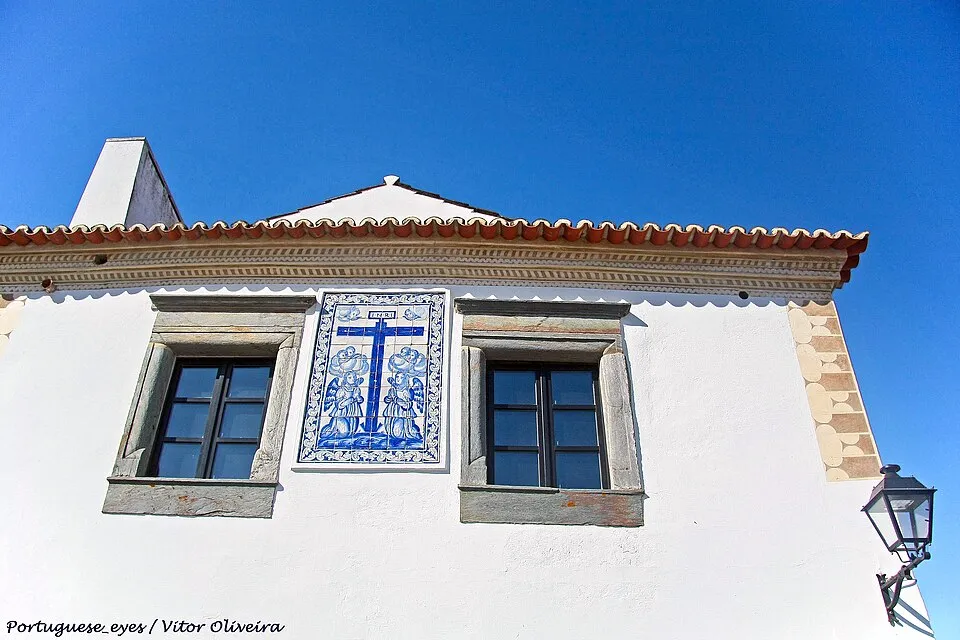
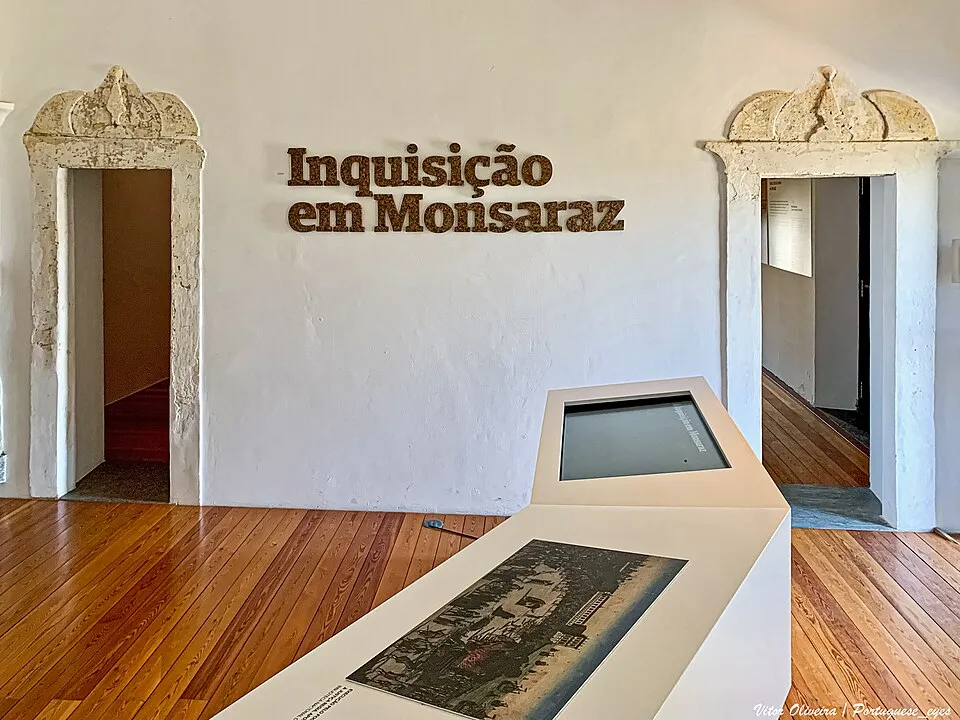
The House of the Inquisition is an interpretive site in the medieval hill town of Monsaraz, operated within the municipality of Reguengos de Monsaraz. Installed in a two storey building on Travessa do Quebra Costas, it is identified by local tradition as a “House of the Inquisition” and functions today as a small interactive center dedicated to Jewish history, the experience of New Christians, and the mechanisms of inquisitorial repression in the Alentejo region.

The site’s curatorial narrative is careful about the limits of what can be historically asserted. Official descriptions emphasize that Monsaraz did not host an Inquisition tribunal, and that trials involving local New Christians fell under the jurisdiction of the Holy Office in Évora. The building’s association with inquisitorial activity is therefore framed as plausible local usage rather than a formal court, for example as lodging for an agent of the Holy Office or as temporary custody before transfer to Évora. This distinction matters, because it separates documented institutional geography from the powerful afterlife of oral memory in places shaped by fear, denunciation, and surveillance.

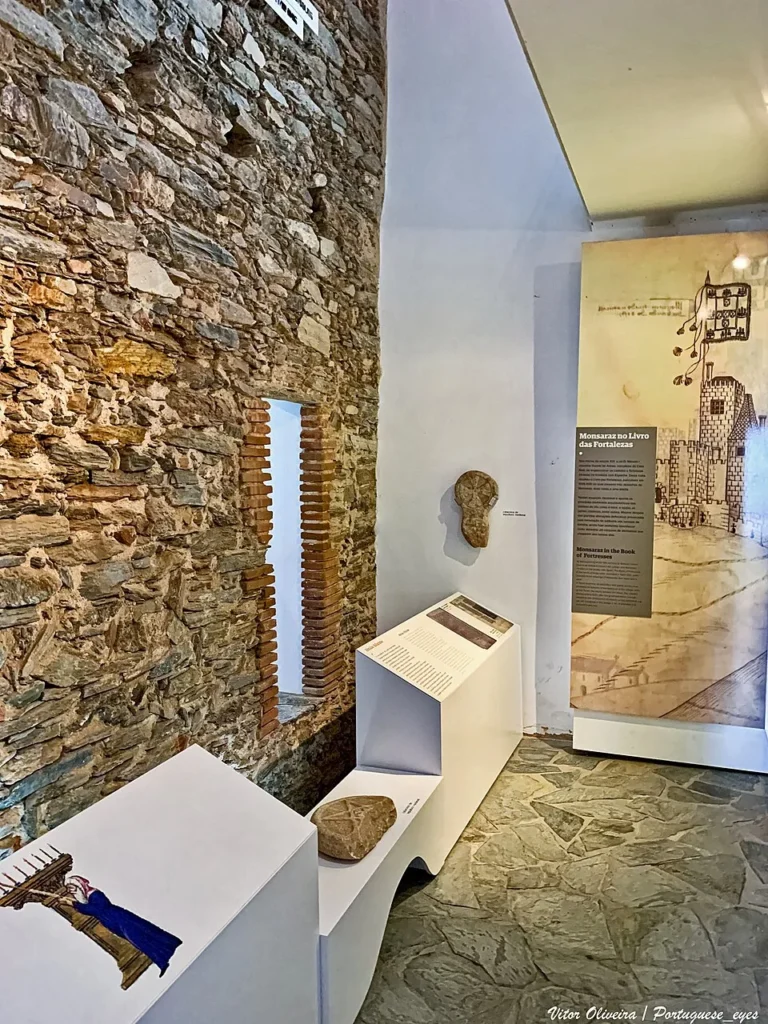
Within this frame, the House of the Inquisition presents Jewish presence in Monsaraz as older than the sixteenth century and not reducible to persecution alone. Municipal interpretive text points to medieval documentary references that indicate an established Jewish minority in the region prior to the Inquisition, and the center positions itself as a local node where dispersed evidence, archival references, and historical scholarship can be brought together for public interpretation.

In broader historical context, the Portuguese Inquisition created a system that targeted New Christians across Portugal, combining religious policing with social control and the production of stigma over generations. For visitors, the Monsaraz center works as a micro scale entry point into this wider history, translating national level mechanisms into a landscape of local memory, jurisdictional routes to Évora, and the long persistence of coerced identities in Iberian society.

Gallery
Community notes

Comments

Logged-in visitors can submit comments for moderation before they appear publicly.

No comments yet.

Article researched and curated by Jew Where.

The Jew Where project is collaborative. Do you have additional information, found an inaccuracy, or have historical photos of this location? Contact our team.

The House of the Inquisition
Portugal / Evora / Civic & Cultural

The House of the Inquisition

"Interpretive center in Monsaraz focused on Jewish history, New Christians, and inquisitorial memory under Évora’s jurisdiction."

Location
Travessa do Quebra Costas 7, Monsaraz
Opening Hours
Summer (April-September): 09:30-12:30, 14:00-18:00; Winter (October-March): 09:30-13:00, 14:00-17:00; Monday: Closed

The House of the Inquisition is an interpretive site in the medieval hill town of Monsaraz, operated within the municipality of Reguengos de Monsaraz. Installed in a two storey building on Travessa do Quebra Costas, it is identified by local tradition as a “House of the Inquisition” and functions today as a small interactive center dedicated to Jewish history, the experience of New Christians, and the mechanisms of inquisitorial repression in the Alentejo region.

The site’s curatorial narrative is careful about the limits of what can be historically asserted. Official descriptions emphasize that Monsaraz did not host an Inquisition tribunal, and that trials involving local New Christians fell under the jurisdiction of the Holy Office in Évora. The building’s association with inquisitorial activity is therefore framed as plausible local usage rather than a formal court, for example as lodging for an agent of the Holy Office or as temporary custody before transfer to Évora. This distinction matters, because it separates documented institutional geography from the powerful afterlife of oral memory in places shaped by fear, denunciation, and surveillance.

Within this frame, the House of the Inquisition presents Jewish presence in Monsaraz as older than the sixteenth century and not reducible to persecution alone. Municipal interpretive text points to medieval documentary references that indicate an established Jewish minority in the region prior to the Inquisition, and the center positions itself as a local node where dispersed evidence, archival references, and historical scholarship can be brought together for public interpretation.

In broader historical context, the Portuguese Inquisition created a system that targeted New Christians across Portugal, combining religious policing with social control and the production of stigma over generations. For visitors, the Monsaraz center works as a micro scale entry point into this wider history, translating national level mechanisms into a landscape of local memory, jurisdictional routes to Évora, and the long persistence of coerced identities in Iberian society.

Timeline

  • 1276 The foral of King Afonso III documents Jews in Monsaraz and orders legal protection in cases of assault.
  • 1317 A document drawn up in Monsaraz alludes to commercial activity connected to local Jewish presence.
  • 1382 Abraão Alfarime, identified as a resident of Monsaraz, appears as lessee of royal fiscal rights in Monsaraz and Mourão.
  • 1492 After the expulsion from Spain, the Jewish community of Monsaraz grew, with Jews settling in houses between Rua de Santiago, Travessa da Cisterna, and Rua Direita.
  • 1502 King Manuel granted the Duke of Braganza revenues from several judiarias, including Monsaraz, after the prohibition of Jews and Muslims in Portugal.
  • 1536 The papal bull creating the Portuguese Inquisition was proclaimed in Évora; Monsaraz fell under the jurisdiction of the Holy Office of Évora, not a local tribunal.
  • 1553–1767 Official municipal interpretation records 86 inquisitorial proceedings involving residents or natives of Monsaraz, most linked to Judaism, heresy, and apostasy.
  • Present The building now operates as Casa da Inquisição – Centro Interativo da História Judaica, open to visitors with seasonal opening hours.

Sources & Bibliography

  1. MUNICÍPIO DE REGUENGOS DE MONSARAZ. Casa da Inquisição – Centro Interativo da História Judaica. Local: Reguengos de Monsaraz. Editora: Município de Reguengos de Monsaraz. Ano: 2023. https://www.cm-reguengos-monsaraz.pt/locais/espanol-casa-da-inquisicao-centro-interativo-da-historia-judaica
  2. MUNICÍPIO DE REGUENGOS DE MONSARAZ. Casa da Inquisição. Interactive Jewish History Center in Monsaraz. Local: Reguengos de Monsaraz. Editora: Município de Reguengos de Monsaraz. Ano: n.d. https://www.cm-reguengos-monsaraz.pt/wp-content/uploads/2020/08/Casa-da-Inquisicao_EN.pdf
  3. TURISMO DE PORTUGAL, I.P. Casa da Inquisição – Centro Interativo da História Judaica. Ano: n.d. https://www.visitportugal.com/pt-pt/node/444253
  4. SARAIVA, António José. The Marrano Factory. The Portuguese Inquisition and Its New Christians 1536-1765. Edição ilustrada. Local: Leiden. Editora: Brill. Ano: 2001. https://books.google.pt/books?id=eG8xUFivagkC
  5. SOYER, François. The Persecution of the Jews and Muslims of Portugal. King Manuel I and the End of Religious Tolerance (1496-7). Local: Leiden. Editora: Brill. Ano: 2007. https://eprints.soton.ac.uk/58890

Additional Information

Official website: https://www.cm-reguengos-monsaraz.pt/locais/espanol-casa-da-inquisicao-centro-interativo-da-historia-judaica/

Email: [email protected]

Phone: +351 927 997 316

Article researched and curated by Jew Where.

The Jew Where project is collaborative. Do you have additional information, found an inaccuracy, or have historical photos of this location? Contact our team.